
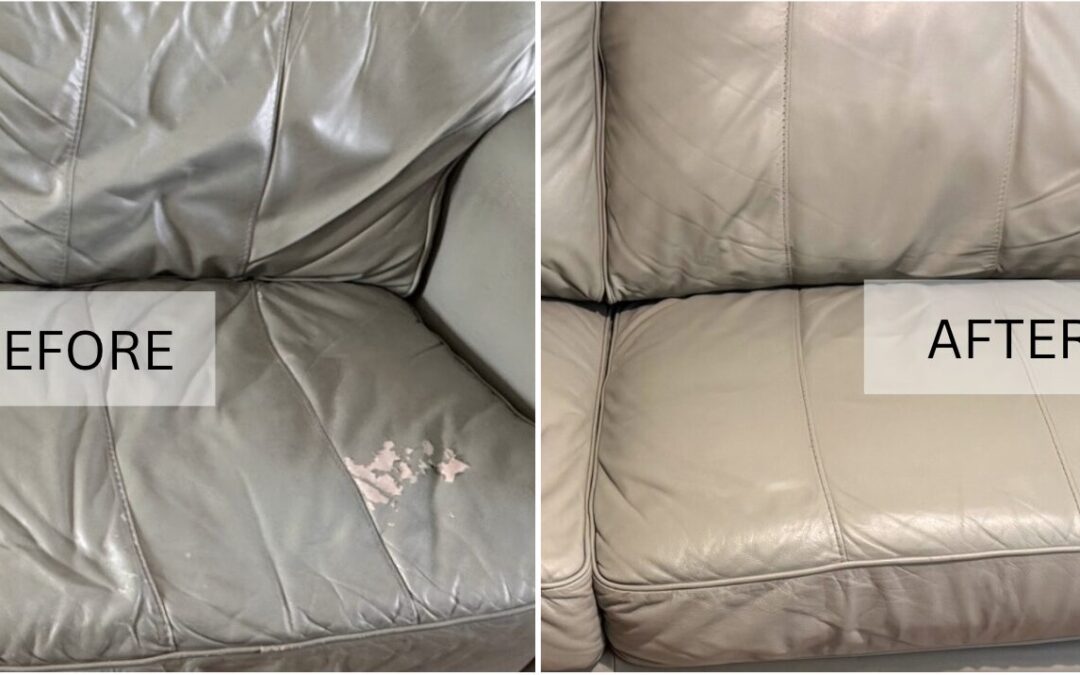
Can a Peeling Leather Sofa Be Restored?
A peeling leather sofa can be incredibly frustrating. One day it looks perfectly fine, and the next you’re noticing flakes on the cushions, cracks on the armrests, and patches where the surface appears to be wearing away. It’s enough to make many homeowners wonder whether their sofa is beyond saving.
The good news is that peeling doesn’t always mean your furniture has reached the end of its life. In many cases, a peeling leather sofa can be restored, improving its appearance and helping to extend its lifespan. Over the years, I’ve helped homeowners throughout Essex restore peeling leather sofas that they assumed would need replacing, often at a fraction of the cost of buying new furniture.
Many people searching online for answers are dealing with leather sofa peeling, leather sofa flaking, or a cracked leather sofa, and aren’t sure whether professional repair is still an option. The success of any restoration depends on several factors, including the type of leather, the extent of the damage, and whether the peeling has been addressed early or left to worsen over time.
While minor peeling can often be repaired through cleaning, filling, leather recolouring, and sealing, more severe damage may require professional leather sofa repair, leather sofa restoration, or, in some cases, reupholstery. Understanding the difference can help you decide whether repair is a worthwhile investment or if alternative solutions should be considered.
In this guide, I’ll explain can a peeling leather sofa be restored, how the restoration process works, what causes leather sofas to peel, and what results you can realistically expect.
Can a Peeling Leather Sofa Be Restored?
In many cases, yes. A peeling leather sofa can often be restored, particularly when the damage is localised and the underlying structure of the leather remains intact.
Professional leather sofa restoration is designed to improve the appearance of damaged areas, strengthen weakened surfaces, and slow down further deterioration. Depending on the condition of the sofa, restoration may involve repairing cracks, replacing lost colour, smoothing damaged sections, and applying protective finishes that help prevent future wear.
However, not all peeling leather is the same.
A genuine leather sofa with a small amount of surface damage will usually respond much better to restoration than a heavily worn bonded leather sofa that is peeling across multiple cushions. I generally don’t undertake repairs to bonded leather or faux leather. In my experience, these materials often don’t provide the reliability or longevity I expect from a professional repair, meaning the results can be unpredictable and short-lived. The material beneath the damaged surface plays a significant role in determining how successful a repair will be and how long the results are likely to last.
As a general rule, the sooner peeling is addressed, the better the outcome. Small areas of damage can often be blended into the surrounding finish, making repairs far less noticeable. When peeling is left untreated, the damaged area tends to spread, making restoration more challenging and sometimes more costly.
The table below provides a quick overview of what you can expect depending on the type of sofa material involved.
| Sofa Material | Can It Be Restored? | Common Repair Methods | Expected Results |
|---|---|---|---|
| Genuine Leather | Yes, in many cases | Cleaning, leather filler, recolouring, sealing and protective finishes | Often delivers the best and longest-lasting restoration results, especially when damage is caught early. |
| Top-Grain Leather | Usually yes | Professional colour restoration, fillers, refinishing and protective coatings | Repairs can blend well with the surrounding leather and restore much of the original appearance. |
| Pigmented Leather | Usually yes | Leather recolouring, leather refinishing, crack repairs, filler work and protective coatings | One of the most repair-friendly leather types. The protective coating allows colour and finish to be restored effectively when damage is localised. |
| Severely Damaged Leather | Limited restoration potential | Professional restoration, panel replacement or reupholstery | Results depend on the extent of the damage and condition of the underlying material. |
Why Is My Leather Sofa Peeling?
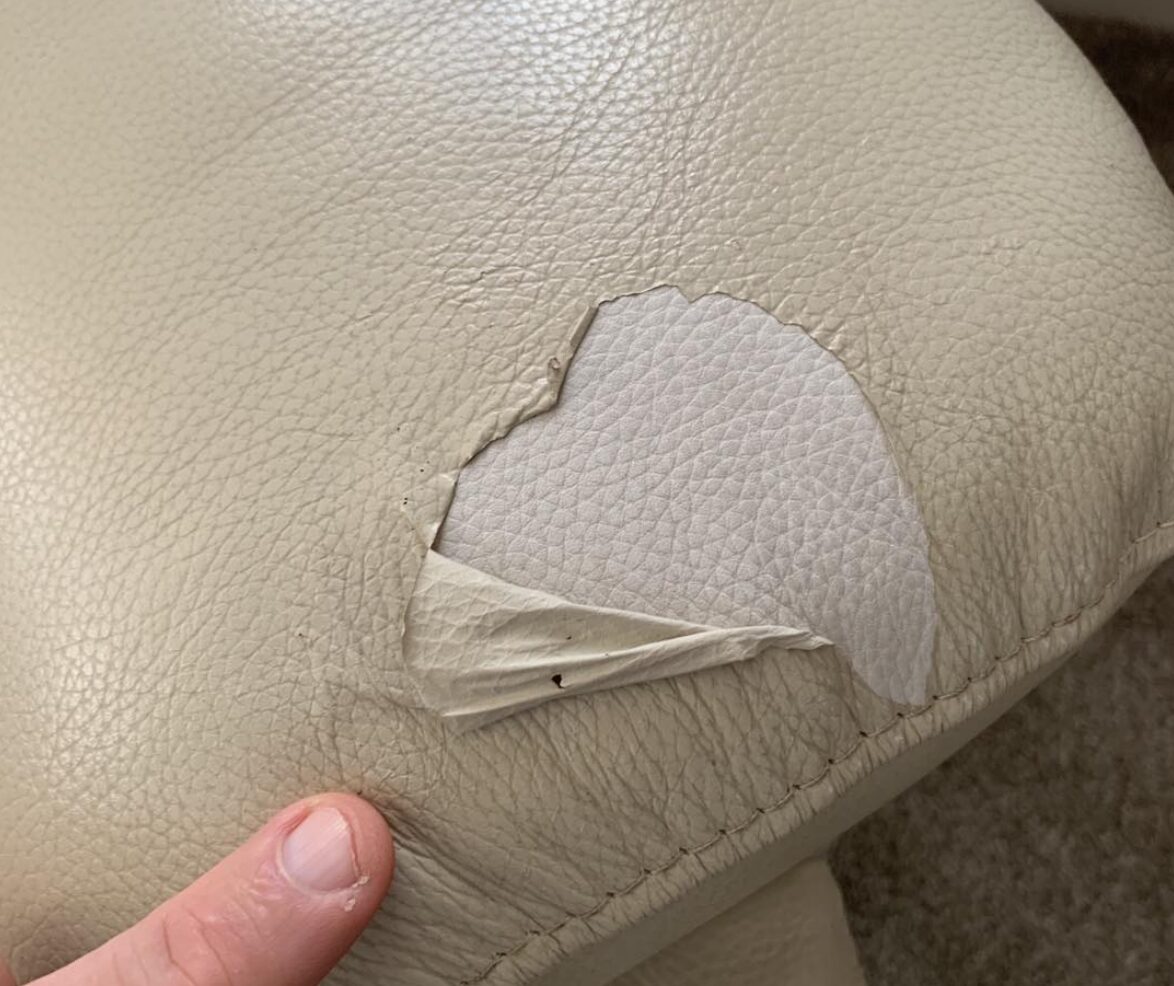
One of the most common questions I’m asked is, “Why is my leather sofa peeling?”
Few people expect a leather sofa to start peeling, especially when it looked perfectly fine when it was first purchased. Peeling can occur for several reasons, including wear and tear, material quality, and environmental factors such as heat and sunlight.
Understanding what causes leather sofas to peel is often the first step towards deciding whether restoration is possible.
Everyday Wear and Tear
Your sofa is one of the most heavily used pieces of furniture in your home. Over time, constant friction from sitting, lying down, and moving across the cushions can gradually wear away protective surface coatings.
Areas such as seat cushions, armrests, and headrests typically show signs of damage first because they experience the most contact. As these protective layers begin to break down, peeling can start to develop.
This type of surface wear is something I see regularly when carrying out leather furniture restoration work throughout Essex.
Sunlight and Heat Exposure
Direct sunlight is one of leather’s biggest enemies.
UV rays can dry out leather and weaken surface finishes, causing them to crack, fade, and eventually peel away. This is one of the most common causes of leather deterioration and peeling. Similarly, placing a sofa near radiators, fireplaces, or other heat sources can accelerate the drying process and make the material more brittle over time.
This is why sofas positioned near large windows often show signs of wear much sooner than those kept away from direct sunlight.
In many cases, sunlight damage and heat damage are major contributing factors behind leather sofa peeling.
Lack of Maintenance
Like skin, leather benefits from regular care.
Without routine cleaning and conditioning, leather can lose moisture and flexibility. As the material becomes drier, it becomes more vulnerable to cracking and surface damage. Dirt, body oils, and everyday grime can also build up over time, gradually degrading protective coatings and contributing to peeling.
Regular sofa maintenance helps keep leather supple and can significantly extend the life of your furniture.
The Quality of the Material
Not all “leather” sofas are created equal.
Genuine leather is generally more durable and repairable because it retains the natural characteristics of animal hide. Bonded leather, however, is made from leftover leather fibres combined with adhesives and finished with a synthetic coating. Once this surface layer begins to fail, peeling often follows.
Faux leather is entirely synthetic and can also suffer from peeling as its outer coating breaks down through age, use, exposure to heat, sunlight, and general ageing leather.
In many cases, what appears to be a leather problem is actually the failure of a surface coating rather than the material underneath.
How to Identify What Type of Leather Sofa You Have
Before attempting any leather sofa repair or restoration, it’s important to understand exactly what material you’re working with.
One of the biggest misconceptions I come across is homeowners assuming they have genuine leather when the sofa is actually bonded or faux leather. The reason this matters is because the type of material will often determine whether a peeling leather sofa can be repaired, how successful the restoration is likely to be, and how long the results will last. There are extreme limitations in attempting repairs on these materials and generally repairs are unsuccessful, making them unlikely repairs I would complete.
Genuine Leather
Genuine leather typically has a natural appearance with subtle variations in grain, texture, and colour. It often feels softer and warmer to the touch than synthetic alternatives and develops character as it ages.
If you look closely, genuine leather usually contains natural imperfections rather than the perfectly uniform finish often seen on manufactured materials.
Because it is a natural material, genuine leather generally offers the best restoration potential when peeling, cracking, fading, or surface damage occurs. This is why many of the leather furniture restoration projects I undertake involve genuine leather furniture that still has many years of life left in it.
Bonded Leather
Bonded leather sits somewhere between genuine leather and synthetic materials.
It is manufactured using leather fibres and scraps that are bonded together before being coated with a polyurethane finish. While it can look similar to genuine leather when new, the surface coating is far more prone to peeling over time.
If large flakes are lifting away from the surface and revealing a fabric-like backing underneath, there’s a good chance you’re dealing with bonded leather.
This is one of the most common materials I see when customers contact me about leather sofa flaking or widespread peeling.
Faux Leather
Faux leather, sometimes called PU leather or synthetic leather, contains no animal hide at all.
Instead, it consists of a man-made material designed to replicate the look and feel of leather. It often has a very consistent texture and colour across the entire piece of furniture.
While faux leather can sometimes be repaired, restoration is often more cosmetic than permanent because the peeling usually occurs within the synthetic coating itself rather than a natural leather surface.
Why Identifying the Material Matters
The type of material covering your sofa plays a huge role in determining whether restoration is likely to succeed.
Genuine leather typically offers the best long-term repair results, while bonded and faux leather repairs can be less predictable and may not last as long. That’s why identifying your sofa material should always be the first step before deciding whether to attempt a DIY repair or seek professional restoration advice.
When customers send me photographs of their furniture, one of the first things I assess is the material itself, as this often determines the most appropriate peeling leather repair method.
How Do You Repair a Peeling Leather Sofa? My Restoration Process
One of the most common questions I receive is “How do you repair a peeling leather sofa?” or “How can I fix peeling leather on my sofa?”
Over the years, I’ve restored hundreds of sofas suffering from peeling, cracking, colour loss, and general wear and tear. You can view examples of previous restoration projects in my gallery of before and after photos. While every repair is different, the restoration process I follow typically depends on the type of leather involved and the extent of the damage.
When I carry out a leather sofa restoration, my goal isn’t simply to hide the damage. I’m looking to stabilise the affected area, rebuild the surface, restore the colour, and protect the leather from further deterioration wherever possible.
Step 1: Thoroughly Clean the Surface
Every successful restoration begins with preparation.
Over time, leather accumulates dirt, body oils, cleaning product residue, and general household grime. If these contaminants are left on the surface, repair products may struggle to bond correctly.
I carefully clean the damaged area using specialist leather-safe products to remove any debris and create a suitable surface for repair.
Step 2: Remove Loose and Peeling Material
Once the surface is clean, any loose flakes or unstable sections of peeling material must be removed.
Although it can be tempting to apply repair products directly over the damaged area, doing so often leads to poor adhesion and a less durable result. Removing loose material creates a solid foundation for the restoration process.
At this stage, my goal is to leave only stable material behind.
Step 3: Strengthen and Rebuild the Damaged Area
Depending on the severity of the peeling, I may apply a leather binder, repair compound, or filler to strengthen weakened areas.
These products help rebuild the damaged surface, fill cracks, and create a smoother finish. In many cases, multiple thin layers are applied rather than one thick coat, allowing each layer to cure properly before the next is added.
This stage is particularly important when restoring genuine leather, where maintaining flexibility is essential for a natural-looking repair.
Step 4: Sand and Smooth the Surface
Once the repair materials have fully cured, the area is carefully sanded and blended.
The objective isn’t to remove the repair, but to create a smooth transition between the restored section and the surrounding leather. This step helps reduce visible edges and creates a more seamless finish before colour restoration begins.
Professional restorers often repeat the filling and sanding process several times to achieve the best possible result.
Step 5: Restore the Colour
One of the most noticeable effects of peeling is colour loss.
After the damaged surface has been repaired, colour-matched leather dyes, pigments, or restoration products are applied to blend the repaired area with the rest of the sofa.
This stage often involves professional leather recolouring and, where required, leather refinishing to recreate the original appearance of the sofa.
Even a well-executed repair can stand out if the colour doesn’t match correctly. That’s why colour matching is one of the most important aspects of professional leather upholstery repair.
Step 6: Apply a Protective Finish
The final stage is protection.
A specialist topcoat or protective finish is applied to help seal the repaired area and improve resistance to future wear. This layer helps protect against everyday use, minor abrasions, and environmental factors that contribute to peeling and deterioration.
Effective leather protection can significantly extend the life of the repair and help reduce future wear.
While no repair can stop the natural ageing process entirely, a properly restored and protected sofa can often continue looking good for many years.
What Results Can You Expect?
In many cases, restoration can dramatically improve the appearance of a peeling leather sofa and make the damage far less noticeable.
However, it’s important to have realistic expectations. The success of any repair depends on the type of leather, the extent of the damage, and the condition of the material beneath the peeling surface.
Minor and localised damage often produces the best results, while heavily worn bonded or faux leather may only achieve a cosmetic improvement. For widespread peeling or severe deterioration, professional restoration or reupholstery may be the most effective long-term solution.
In my experience, the best restoration results are achieved when peeling leather is addressed early. One recent leather sofa restoration I completed in Chelmsford, Essex involved a sofa with significant peeling across the seat cushions and front panels. The project involved extensive peeling leather repair, colour restoration, and surface refinishing to restore the appearance of the worn leather. After carefully preparing the damaged areas, rebuilding the worn sections, restoring the colour, and applying a protective finish, I was able to dramatically improve the sofa’s appearance and extend its usable life. While every sofa is different, projects like this demonstrate how professional leather furniture restoration can often provide a cost-effective alternative to replacement, particularly when the underlying structure of the furniture remains in good condition.
Is It Worth Repairing a Peeling Leather Sofa?
One of the questions I hear most often is, “Should I repair or replace a peeling leather sofa?”
The answer depends on several factors, including the type of leather, the extent of the damage, the age of the furniture, and its overall condition.
In many cases, is peeling leather repairable? Absolutely. If the sofa is structurally sound and the peeling is limited to specific areas, professional leather sofa repair can often restore its appearance and extend its lifespan significantly. This is particularly true for genuine leather sofas, where the underlying hide often remains in good condition even when the surface finish has deteriorated.
However, there are situations where replacement may be the more sensible option. If the sofa has severe structural issues, widespread deterioration, or heavily damaged bonded leather across multiple sections, the cost of repair may outweigh the value of the furniture itself.
When I Usually Recommend Repair
In my experience, repair is often worthwhile when:
- The sofa is genuine leather.
- The damage is localised rather than widespread.
- The furniture is comfortable and structurally sound.
- The sofa has sentimental value.
- Replacement would be significantly more expensive than restoration.
Many of the customers I work with are surprised by how much improvement can be achieved through professional leather sofa restoration. You can read what previous customers have said about their experience on my reviews page.
When Replacement May Be Worth Considering
Replacement may be the better option when:
- The material is extensively deteriorated.
- The frame or cushions are failing.
- The peeling affects most of the sofa.
- Previous repairs have repeatedly failed.
That’s why I always recommend having the sofa assessed before making a decision. Often, a quick inspection can determine whether repair is likely to provide a worthwhile long-term solution.
When Restoration May Not Be Enough
As someone who restores leather furniture for a living, I wish I could say that every peeling leather sofa can be saved. Unfortunately, that’s not always the case.
While I’ve successfully restored many peeling leather sofas across Essex, there are situations where restoration may only provide a temporary improvement or where alternative solutions make more sense.
One of the first things I look for during an assessment is the extent of the damage. A sofa with a few isolated areas of peeling is very different from one where the surface coating is failing across multiple cushions, armrests, and panels.
Signs That Restoration May Have Limitations
In my experience, restoration becomes more challenging when:
- Peeling is widespread across large sections of the sofa.
- The backing material is clearly visible beneath the surface.
- Deep cracking is present throughout the leather.
- Previous DIY repairs have failed or been poorly carried out.
- The sofa is made from heavily deteriorated bonded or faux leather.
- Structural issues such as sagging cushions or damaged frames are also present.
In these situations, I can often improve the appearance of the furniture, but it’s important to have realistic expectations about the long-term durability of the repair.
Sometimes the Material Is the Problem
One of the biggest factors I consider is the type of material involved.
Genuine leather typically offers the best restoration potential because the underlying hide often remains strong even when the surface finish has worn away. Bonded leather and faux leather can be much more problematic because the peeling is often a sign that the material itself is breaking down, and it is extremely unlikely repairs can be completed.
When the surface coating continues to separate from the layers beneath it, repairs may become increasingly difficult to maintain over time.
What Are the Alternatives?
If I don’t believe restoration will provide a worthwhile long-term solution, I’ll always say so.
Depending on the condition of the sofa, alternatives may include:
- Partial leather upholstery repair of the damaged sections.
- Full reupholstery.
- Replacement cushion panels.
- Protective covers as a temporary solution.
- Replacing the furniture altogether.
In some situations, upholstery restoration or partial panel replacement can provide a more practical solution than attempting to restore severely deteriorated surfaces.
While replacement is usually the most expensive option, there are occasions where it makes more financial sense than repeatedly repairing severely deteriorated materials.
My Honest Advice
If your sofa is structurally sound and the peeling has been caught reasonably early, restoration is often a worthwhile investment. I’ve seen many sofas that homeowners assumed were beyond saving transformed through professional repair and colour restoration.
However, if the damage is extensive and the material is failing throughout the entire sofa, it’s important to weigh up the cost of restoration against the value and expected lifespan of the furniture.
That’s why I always recommend having the sofa assessed before making a decision. In many cases, a professional inspection can quickly determine whether restoration is likely to deliver the results you’re hoping for.
How Much Does It Cost to Repair a Peeling Leather Sofa?
The cost of repairing a peeling leather sofa depends on several factors, including the size of the damaged area, the type of leather involved, and the amount of restoration work required.
Small, localised repairs are naturally less expensive than large-scale restoration projects involving multiple cushions, extensive colour restoration, or widespread peeling. Genuine leather sofas are often more worthwhile to repair because of their durability and long-term value, whereas heavily deteriorated bonded or faux leather may require a different approach.
Because every sofa is different, it’s difficult to provide an accurate price without seeing the damage first.
The easiest way to find out whether your sofa is worth repairing is to send a few clear photographs. I can then assess the condition of the furniture and provide honest advice on the most suitable and cost-effective solution.
How to Prevent a Leather Sofa from Peeling Again
One of the most common questions I’m asked after completing a leather sofa restoration is, “How do I stop leather sofa peeling from happening again?”
While no leather sofa will stay in perfect condition forever, I’ve found that a few simple maintenance habits can dramatically extend its lifespan and help prevent peeling, cracking, and premature wear.
Keep Your Sofa Out of Direct Sunlight
If there’s one piece of advice I give more than any other, it’s to keep leather furniture away from prolonged direct sunlight whenever possible.
Over the years, I’ve seen countless sofas suffer unnecessary damage because they were positioned next to large windows or conservatory doors. UV exposure gradually breaks down protective finishes, causes colours to fade, and dries out the leather, making it more vulnerable to cracking and peeling.
Avoid Placing Leather Near Heat Sources
Heat can be just as damaging as sunlight.
Radiators, wood burners, and other heat sources can draw moisture from the leather, causing it to become dry and brittle over time. Once leather loses its natural flexibility, surface damage becomes much more likely.
Clean Your Leather Sofa Regularly
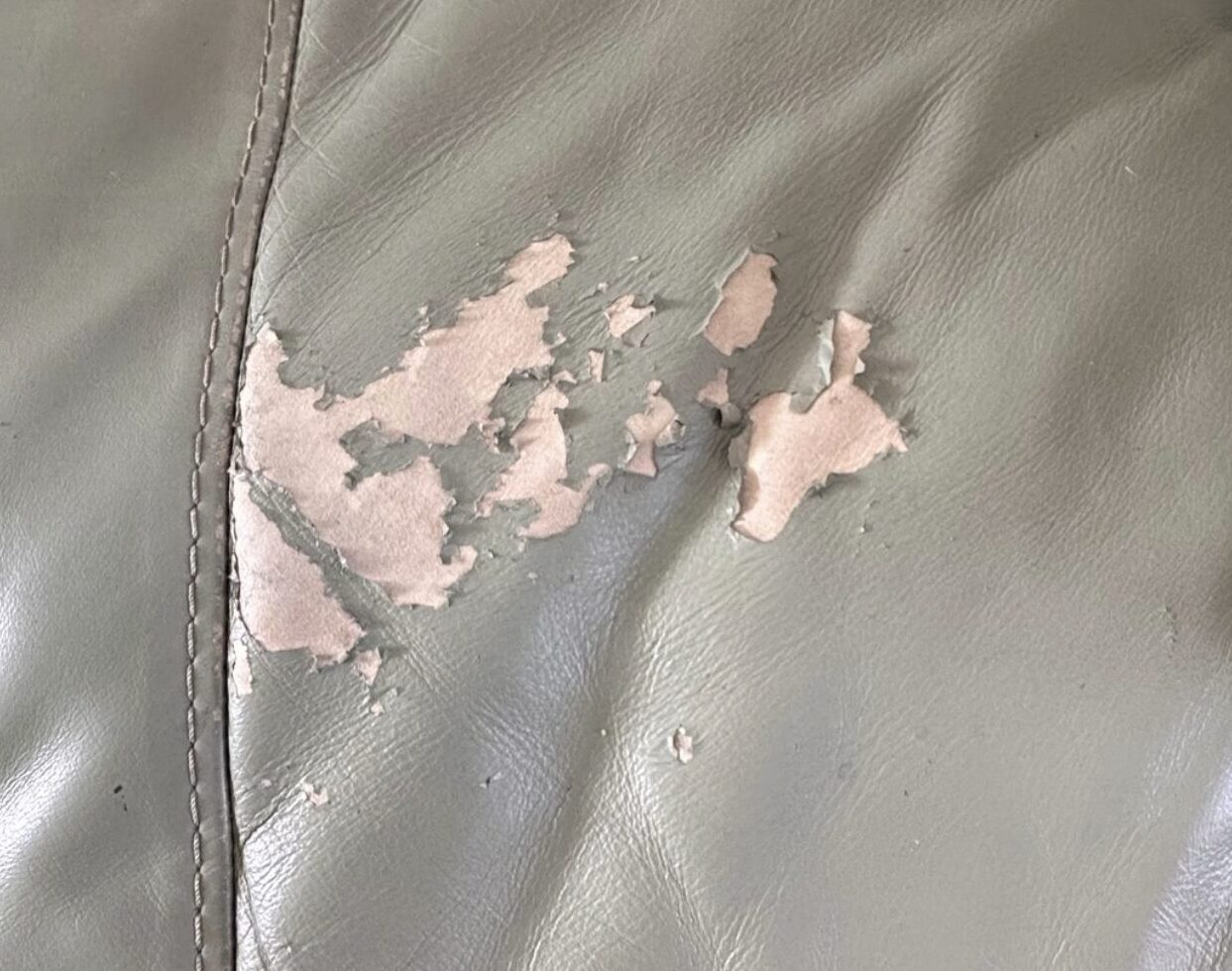
One of the most common questions I receive is “How do you repair a peeling leather sofa?” or “How can I fix peeling leather on my sofa?”
Over the years, I’ve restored hundreds of sofas suffering from peeling, cracking, colour loss, and general wear and tear. You can view examples of previous restoration projects in my gallery of before and after photos. While every repair is different, the restoration process I follow typically depends on the type of leather involved and the extent of the damage.
When I carry out a leather sofa restoration, my goal isn’t simply to hide the damage. I’m looking to stabilise the affected area, rebuild the surface, restore the colour, and protect the leather from further deterioration wherever possible.
Step 1: Thoroughly Clean the Surface
Every successful restoration begins with preparation.
Over time, leather accumulates dirt, body oils, cleaning product residue, and general household grime. If these contaminants are left on the surface, repair products may struggle to bond correctly.
I carefully clean the damaged area using specialist leather-safe products to remove any debris and create a suitable surface for repair.
Step 2: Remove Loose and Peeling Material
Once the surface is clean, any loose flakes or unstable sections of peeling material must be removed.
Although it can be tempting to apply repair products directly over the damaged area, doing so often leads to poor adhesion and a less durable result. Removing loose material creates a solid foundation for the restoration process.
At this stage, my goal is to leave only stable material behind.
Step 3: Strengthen and Rebuild the Damaged Area
Depending on the severity of the peeling, I may apply a leather binder, repair compound, or filler to strengthen weakened areas.
These products help rebuild the damaged surface, fill cracks, and create a smoother finish. In many cases, multiple thin layers are applied rather than one thick coat, allowing each layer to cure properly before the next is added.
This stage is particularly important when restoring genuine leather, where maintaining flexibility is essential for a natural-looking repair.
Step 4: Sand and Smooth the Surface
Once the repair materials have fully cured, the area is carefully sanded and blended.
The objective isn’t to remove the repair, but to create a smooth transition between the restored section and the surrounding leather. This step helps reduce visible edges and creates a more seamless finish before colour restoration begins.
Professional restorers often repeat the filling and sanding process several times to achieve the best possible result.
Step 5: Restore the Colour
One of the most noticeable effects of peeling is colour loss.
After the damaged surface has been repaired, colour-matched leather dyes, pigments, or restoration products are applied to blend the repaired area with the rest of the sofa.
This stage often involves professional leather recolouring and, where required, leather refinishing to recreate the original appearance of the sofa.
Even a well-executed repair can stand out if the colour doesn’t match correctly. That’s why colour matching is one of the most important aspects of professional leather upholstery repair.
Step 6: Apply a Protective Finish
The final stage is protection.
A specialist topcoat or protective finish is applied to help seal the repaired area and improve resistance to future wear. This layer helps protect against everyday use, minor abrasions, and environmental factors that contribute to peeling and deterioration.
Effective leather protection can significantly extend the life of the repair and help reduce future wear.
While no repair can stop the natural ageing process entirely, a properly restored and protected sofa can often continue looking good for many years.
What Results Can You Expect?
In many cases, restoration can dramatically improve the appearance of a peeling leather sofa and make the damage far less noticeable.
However, it’s important to have realistic expectations. The success of any repair depends on the type of leather, the extent of the damage, and the condition of the material beneath the peeling surface.
Minor and localised damage often produces the best results, while heavily worn bonded or faux leather may only achieve a cosmetic improvement. For widespread peeling or severe deterioration, professional restoration or reupholstery may be the most effective long-term solution.
In my experience, the best restoration results are achieved when peeling leather is addressed early. One recent leather sofa restoration I completed in Chelmsford, Essex involved a sofa with significant peeling across the seat cushions and front panels. The project involved extensive peeling leather repair, colour restoration, and surface refinishing to restore the appearance of the worn leather. After carefully preparing the damaged areas, rebuilding the worn sections, restoring the colour, and applying a protective finish, I was able to dramatically improve the sofa’s appearance and extend its usable life. While every sofa is different, projects like this demonstrate how professional leather furniture restoration can often provide a cost-effective alternative to replacement, particularly when the underlying structure of the furniture remains in good condition.
Is It Worth Repairing a Peeling Leather Sofa?
One of the questions I hear most often is, “Should I repair or replace a peeling leather sofa?”
The answer depends on several factors, including the type of leather, the extent of the damage, the age of the furniture, and its overall condition.
In many cases, is peeling leather repairable? Absolutely. If the sofa is structurally sound and the peeling is limited to specific areas, professional leather sofa repair can often restore its appearance and extend its lifespan significantly. This is particularly true for genuine leather sofas, where the underlying hide often remains in good condition even when the surface finish has deteriorated.
However, there are situations where replacement may be the more sensible option. If the sofa has severe structural issues, widespread deterioration, or heavily damaged bonded leather across multiple sections, the cost of repair may outweigh the value of the furniture itself.
When I Usually Recommend Repair
In my experience, repair is often worthwhile when:
- The sofa is genuine leather.
- The damage is localised rather than widespread.
- The furniture is comfortable and structurally sound.
- The sofa has sentimental value.
- Replacement would be significantly more expensive than restoration.
Many of the customers I work with are surprised by how much improvement can be achieved through professional leather sofa restoration. You can read what previous customers have said about their experience on my reviews page.
When Replacement May Be Worth Considering
Replacement may be the better option when:
- The material is extensively deteriorated.
- The frame or cushions are failing.
- The peeling affects most of the sofa.
- Previous repairs have repeatedly failed.
That’s why I always recommend having the sofa assessed before making a decision. Often, a quick inspection can determine whether repair is likely to provide a worthwhile long-term solution.
How Much Does It Cost to Repair a Peeling Leather Sofa?
The cost of repairing a peeling leather sofa depends on several factors, including the size of the damaged area, the type of leather involved, and the amount of restoration work required.
Small, localised repairs are naturally less expensive than large-scale restoration projects involving multiple cushions, extensive colour restoration, or widespread peeling. Genuine leather sofas are often more worthwhile to repair because of their durability and long-term value, whereas heavily deteriorated bonded or faux leather may require a different approach.
Because every sofa is different, it’s difficult to provide an accurate price without seeing the damage first.
The easiest way to find out whether your sofa is worth repairing is to send a few clear photographs. I can then assess the condition of the furniture and provide honest advice on the most suitable and cost-effective solution.
How to Prevent a Leather Sofa from Peeling Again
One of the most common questions I’m asked after completing a leather sofa restoration is, “How do I stop leather sofa peeling from happening again?”
While no leather sofa will stay in perfect condition forever, I’ve found that a few simple maintenance habits can dramatically extend its lifespan and help prevent peeling, cracking, and premature wear.
Keep Your Sofa Out of Direct Sunlight
If there’s one piece of advice I give more than any other, it’s to keep leather furniture away from prolonged direct sunlight whenever possible.
Over the years, I’ve seen countless sofas suffer unnecessary damage because they were positioned next to large windows or conservatory doors. UV exposure gradually breaks down protective finishes, causes colours to fade, and dries out the leather, making it more vulnerable to cracking and peeling.
Avoid Placing Leather Near Heat Sources
Heat can be just as damaging as sunlight.
Radiators, wood burners, and other heat sources can draw moisture from the leather, causing it to become dry and brittle over time. Once leather loses its natural flexibility, surface damage becomes much more likely.
Clean Your Leather Sofa Regularly
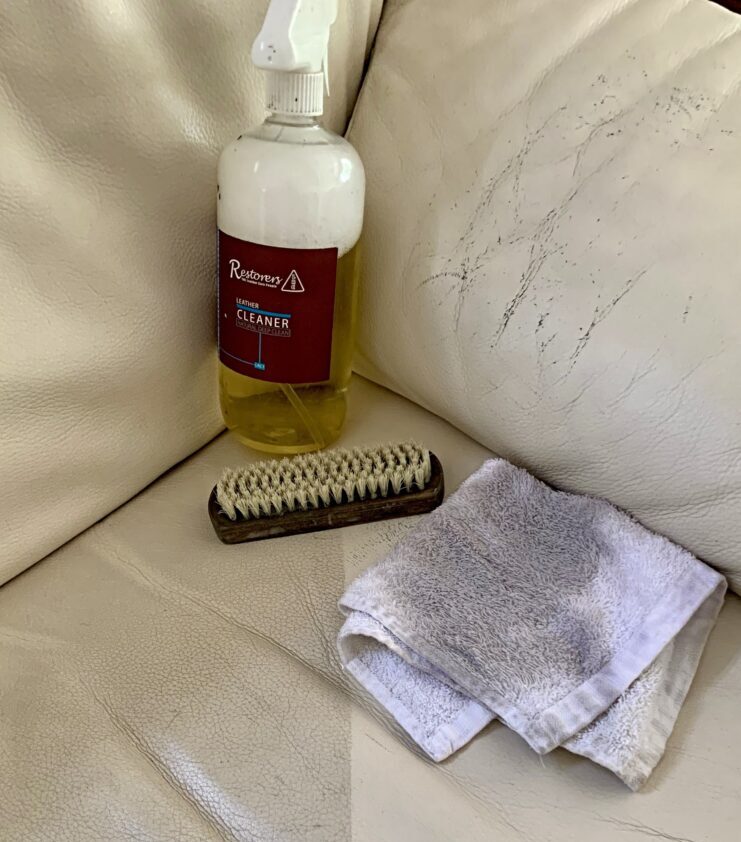
Leather doesn’t need constant attention, but it does benefit from routine cleaning.
Dust, dirt, body oils, and everyday grime can slowly build up on the surface and contribute to the breakdown of protective coatings. I generally recommend wiping the sofa down regularly with a soft cloth and using products specifically designed for leather when a deeper clean is needed. Any product that has warning, caution, or irritant triangles on the label is not usually suitable for leather. A neutral pH based cleaner is always best.
Use a Quality Leather Conditioner
Conditioning is one of the simplest ways to help keep leather soft, supple, and less prone to cracking.
Just as skin can dry out without moisturiser, leather can lose the oils and moisture that help it remain flexible. Applying a suitable leather conditioner periodically can help maintain the material and reduce the risk of future damage.
Alongside a suitable leather conditioner, ongoing leather protection and regular sofa maintenance can significantly reduce future wear and prolong the life of the furniture.
Deal With Spills Quickly
When spills occur, I always recommend dealing with them as quickly as possible. Leaving liquids on the surface for extended periods can lead to staining, discolouration, or damage to protective coatings.
Consider Professional Leather Maintenance
Many of the sofas I restore could have avoided significant damage with occasional professional care.
Regular inspections, deep cleaning, and protective treatments can help identify early signs of wear before they develop into peeling, cracking, or colour loss.
My Final Thoughts on Leather Care
In my experience, prevention is always easier and less expensive than repair.
A little ongoing maintenance, combined with sensible positioning away from sunlight and heat, can significantly extend the life of your furniture and help prevent future peeling.
Looking for Leather Sofa Restoration in Essex or London?
If you’re based in Essex and wondering whether your peeling leather sofa can be restored, I may be able to help.
Having lived in Essex for over 40 years, I regularly carry out leather sofa restoration, leather sofa repair, leather furniture restoration, and leather upholstery repair services throughout Chelmsford, Brentwood, Billericay, Basildon, Colchester, Maldon, Southend-on-Sea and many of the surrounding Essex towns and villages. With decades of hands-on experience working with leather and professional training through The Leather Repair Company, I help customers restore and extend the life of their leather furniture. I also serve customers across parts of Outer London, including East London and North East London
As a leather repair specialist, I understand that every piece of furniture is different. The map below shows the areas I regularly cover, but if you’re unsure whether you’re within my service area, feel free to get in touch. I’m always happy to advise.
FAQs
Your content goes here. Edit or remove this text inline or in the module Content settings. You can also style every aspect of this content in the module Design settings and even apply custom CSS to this text in the module Advanced settings.
Can a peeling leather sofa be fixed?
Yes, in many cases a peeling leather sofa can be fixed, particularly if the damage is caught early. I’ve restored many sofas where the peeling was limited to specific areas, using specialist repair products, colour restoration techniques, and protective finishes.
Can peeled leather be restored?
Peeled leather can often be restored, but the results will vary depending on the material involved. Genuine leather generally offers the best restoration potential because the underlying hide often remains intact.
Is peeling leather repairable?
Yes, peeling leather is often repairable. Minor peeling can usually be improved through cleaning, filling, recolouring, and sealing. More extensive damage may require professional restoration to achieve the best possible result.
What causes leather sofas to peel?
In my experience, peeling is most commonly caused by wear and tear, exposure to sunlight, heat, lack of maintenance, and the breakdown of protective surface finishes.
How much does it cost to repair a peeling leather sofa?
The cost depends on the size of the damaged area, the type of leather, and the amount of restoration work required. I always recommend sending photographs so I can assess the damage and provide an accurate quote.
How long does leather sofa repair last?
The lifespan of a repair depends on the type of leather, the quality of the repair, and how well the furniture is maintained afterwards. Professionally restored genuine leather can often continue looking good for many years.
What is the best way to fix peeling leather?
The lifespan of a repair depends on the type of leather, the quality of the repair, and how well the furniture is maintained afterwards. Professionally restored genuine leather can often continue looking good for many years.
How do I prevent my leather sofa from peeling again?
The best way to prevent future peeling is through regular cleaning, conditioning, protection from sunlight and heat, and ongoing leather care.
Do you repair all types of leather
I work with most leather types, including genuine leather, top-grain leather, and pigmented leather. However, I don’t carry out repairs on bonded leather or faux leather. In my experience, these materials have already begun to break down at a structural level by the time peeling appears, which means any repair is unlikely to deliver a lasting or reliable result. If you’re unsure what type of leather your sofa is, feel free to send me a few photos and I’ll be happy to take a look and advise you honestly.
Conclusion
So, can a peeling leather sofa be restored?
In many cases, yes. While the success of the repair depends on the type of leather and the extent of the damage, professional restoration can often dramatically improve the appearance of a peeling sofa and help extend its lifespan for years to come. The key is addressing the problem early before the damage becomes more severe.
If your leather sofa is showing signs of peeling, cracking, colour loss, or general wear and tear, I’d be happy to take a look. Simply get in touch with Supreme Leather Restorations to request your free, no-obligation quote, and I’ll provide honest advice on the best solution for your furniture.
Check Out My Previous Blogs

How to Fix a Cracked Leather Sofa: Expert Guide by Supreme Leather Restorations (Essex)
Cracked leather is one of the most common issues I repair across Essex, from Chelmsford to Colchester. This guide explains what causes leather to crack, how a professional restores softness and colour, and why expert repair lasts longer than DIY kits. If your sofa is drying, peeling or splitting, here’s what to know before booking a repair.

Professional Leather Cleaning in Essex — Expert Care for Sofas, Furniture and Car Seats
Introduction Leather is timeless. Whether it is a family sofa that has softened over the years or the smooth interior of a cherished car, leather has a way of adding warmth, comfort and a touch of luxury to everyday life. But like anything that is used and loved, it...

Is Leather Repair Worth It? Cost, Longevity and When to Repair | Essex Leather Specialist
Introduction Few materials age as gracefully as leather. In Essex living rooms and Chelmsford garages alike, it brings comfort and character, from sofas to car interiors. When wear shows in the form of cracks, scratches or fading, it is natural to ask whether leather...